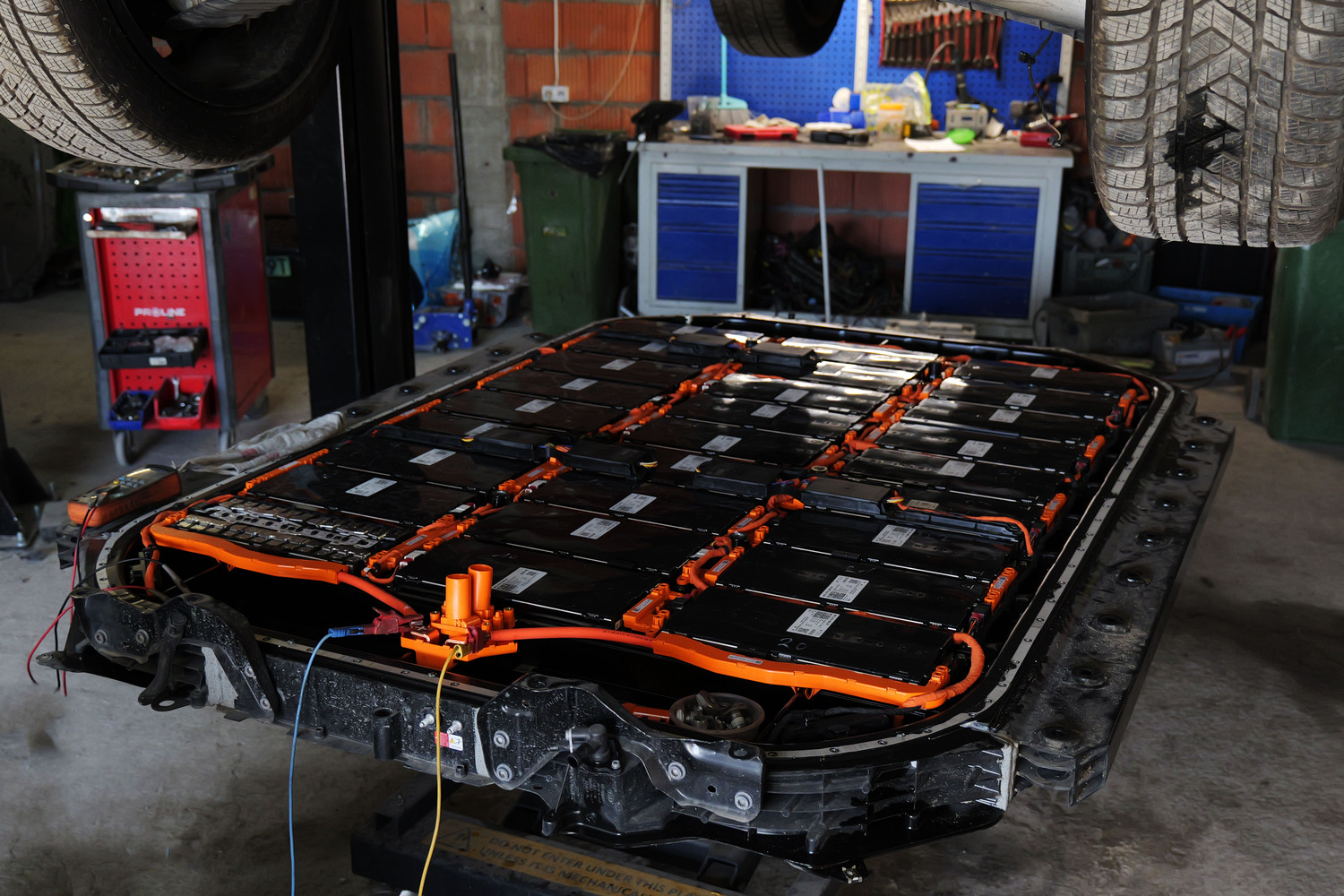
The battery is one of the most important components in an electric or hybrid vehicle, but understanding its real condition requires much more than checking whether the car still drives normally.
Professional EV battery diagnostics can reveal how the battery is performing, whether individual cells or modules are operating evenly and whether there are early signs of degradation or failure.
Quick answer:
EV battery diagnostics involves analysing battery voltage, temperature, state of charge, cell balance, fault codes and performance under different operating conditions. The goal is to identify the real source of a problem before deciding whether repair, regeneration or replacement is needed.
Why EV battery diagnostics is important
A high-voltage battery is a complex system made up of many cells, modules, sensors and control components.
A warning light may indicate a problem, but it rarely explains the full cause.
The fault could be related to:
- degraded battery cells
- temperature differences
- damaged sensors
- electrical connections
- battery management system faults
- cooling system problems
Without proper testing, it is difficult to know which component is actually responsible.
What does a specialist check during battery diagnostics?
The exact procedure depends on the vehicle and battery technology, but professional diagnostics usually includes analysis of several key parameters.
Battery voltage
Voltage measurements can provide important information about the condition of individual battery sections.
If one module shows significantly different values from the others, it may indicate uneven degradation or a developing fault.
The difference between modules can often be more important than the overall battery voltage itself.
Cell and module balance
Battery packs work best when individual cells or modules operate within a similar range.
As batteries age, these differences can increase.
If one section becomes significantly weaker, it can limit the performance of the entire battery pack and trigger fault codes.
Good to know:
A battery pack does not always need to be completely replaced because of one weak module. Detailed diagnostics can show whether repair or regeneration is technically possible.
Battery temperature
Temperature is one of the most important factors affecting battery performance and lifespan.
Specialists may compare readings from multiple temperature sensors to identify unusual differences or signs of overheating.
High temperatures can be caused by battery degradation, poor cooling or restricted airflow.
For this reason, battery diagnostics often includes checking the cooling system as well.
State of charge and battery behaviour
The state of charge shows how much usable energy remains in the battery at a given moment.
However, specialists are also interested in how quickly this value changes.
A battery that appears to charge very quickly and then loses energy just as fast may have reduced usable capacity.
These changes can sometimes be visible to the driver as rapid fluctuations on the dashboard battery indicator.
Charging and discharging performance
Battery behaviour under load can reveal problems that are not obvious when the vehicle is stationary.
During diagnostics, technicians may analyse how the battery reacts when energy is being drawn from it and when regenerative braking returns energy to the pack.
Weak modules may show greater voltage drops under load than healthy ones.
Battery management system data
The battery management system, often referred to as BMS, constantly monitors the high-voltage battery.
It controls and records information related to:
- battery voltage
- temperature
- charging
- discharging
- cell balance
- safety conditions
Analysing this data can help specialists understand what is happening inside the battery rather than relying only on visible symptoms.
Are fault codes enough to diagnose an EV battery?
No.
Fault codes are useful because they indicate where the vehicle has detected an abnormal condition, but they should normally be treated as the beginning of the diagnostic process.
A fault code may point toward a battery problem without identifying the exact component responsible.
Further measurements are needed to determine whether the issue is related to battery degradation, cooling, wiring, sensors or another part of the high-voltage system.
Proper diagnostics can prevent unnecessary replacement.
Replacing a complete high-voltage battery without analysing its actual condition can lead to unnecessary costs. Testing first helps determine the most appropriate repair strategy.
When should an EV or hybrid battery be checked?
Battery diagnostics is especially useful when the vehicle begins to show unusual behaviour.
Common warning signs include:
- hybrid or EV system warning lights
- reduced electric range
- rapid changes in battery charge level
- reduced performance
- higher energy or fuel consumption
- frequent engine operation in a hybrid vehicle
- charging problems
A diagnostic check can also be useful before purchasing a used hybrid or electric vehicle, particularly if battery condition is an important factor in the vehicle’s value.
Can diagnostics predict battery failure?
Diagnostics cannot predict the exact date when a battery will fail.
It can, however, reveal signs of degradation, imbalance and abnormal operating conditions.
This information helps assess whether the battery is currently operating correctly or whether further inspection may be needed.
Early detection can be particularly valuable when the problem is related to battery cooling or a limited number of weaker modules.
What happens after battery diagnostics?
The next step depends on the results.
If the battery is operating correctly, no further work may be required.
If a fault is identified, possible solutions may include:
- repairing electrical connections
- servicing the battery cooling system
- replacing selected components
- battery regeneration
- repairing the battery pack
- complete battery replacement
You can learn more about specialist hybrid and EV services available through the HybridElectric network.
Why high-voltage batteries require specialist knowledge
Hybrid and electric vehicle batteries operate at potentially dangerous voltages.
Testing and repairing these systems requires appropriate training, diagnostic equipment and safety procedures.
This is why high-voltage battery work should be performed by technicians who understand both battery technology and the complete electric drivetrain.
Find an EV and hybrid specialist
HybridElectric connects workshops specialising in hybrid and electric vehicle diagnostics, battery systems and advanced repairs.
The network includes specialist locations in different European markets, including Manchester, Dublin and Gorzów Wielkopolski.
Need professional battery diagnostics?
Find a specialist HybridElectric workshop and have your hybrid or EV battery professionally checked.
Find a workshop