Modern hybrid and electric vehicles rely on complex electrical systems operating at significantly higher voltages than conventional automotive electronics. Batteries, inverters, electric motors, converters, charging components and high-voltage wiring all need to work together correctly.
When one part of this system develops a fault, professional high voltage system repair begins with accurate diagnostics. A dashboard warning alone rarely tells the complete story, and replacing an expensive component before confirming the cause can lead to unnecessary costs.
Quick answer:
High voltage system repair can involve the battery, inverter, electric motor, wiring, connectors, cooling systems, sensors or control electronics. Because these components interact with each other, specialist diagnostics and appropriate high-voltage safety procedures are essential before any repair begins.
What is the high-voltage system in a hybrid or EV?
The high-voltage system is the part of a hybrid or electric vehicle responsible for storing, converting and delivering electrical energy to the drivetrain.
Depending on the vehicle, it can include:
HV Battery
Stores electrical energy used by the hybrid or electric drivetrain.
Inverter
Controls and converts electrical energy between the battery and electric motor.
Electric Motor
Uses electrical energy to drive the vehicle or support the combustion engine.
DC-DC Converter
Converts high-voltage electricity to a lower voltage for conventional vehicle systems.
HV Wiring
Connects major high-voltage components throughout the vehicle.
Control Systems
Monitor voltage, temperature, isolation, energy flow and system safety.
A problem with one of these components can affect the operation of the entire drivetrain. This is why high-voltage faults should be investigated as part of a complete system rather than treating individual components in isolation.
What are the most common high-voltage system faults?
Hybrid and electric vehicle faults vary considerably between manufacturers and models, but several problem areas appear repeatedly.
High-voltage battery faults
The battery is one of the most important components in the system and one of the most frequently discussed.
Possible battery-related faults include:
- individual module or cell degradation
- voltage imbalance
- reduced battery capacity
- temperature problems
- damaged electrical connections
- battery management system faults
A battery fault does not automatically mean that the entire pack must be replaced. Depending on its condition, specialist testing may identify opportunities for repair or regeneration.
You can learn more about common hybrid battery problems and how battery condition is assessed.
Inverter and power electronics faults
The inverter is responsible for controlling electrical power between the battery and motor. When it develops a fault, the vehicle may lose electric drive assistance, enter reduced-power mode or display a hybrid or EV system warning.
However, not every inverter-related fault means the inverter itself has failed.
The cause may instead involve:
- cooling system problems
- damaged connectors
- voltage irregularities
- control electronics
- other high-voltage components
Our guide to hybrid inverter problems explains these symptoms in more detail.
High-voltage isolation faults
The high-voltage electrical system must remain properly isolated from the vehicle body and conventional low-voltage circuits.
If the vehicle detects an insulation or isolation problem, it may disable part of the high-voltage system for safety reasons.
Possible causes include:
- damaged high-voltage cables
- moisture inside electrical components
- damaged connectors
- internal battery problems
- accident damage
- faults in electric drivetrain components
Important:
An isolation fault is not something that should be diagnosed by trial and error. High-voltage systems require appropriate testing equipment and safe working procedures.
High-voltage wiring and connector problems
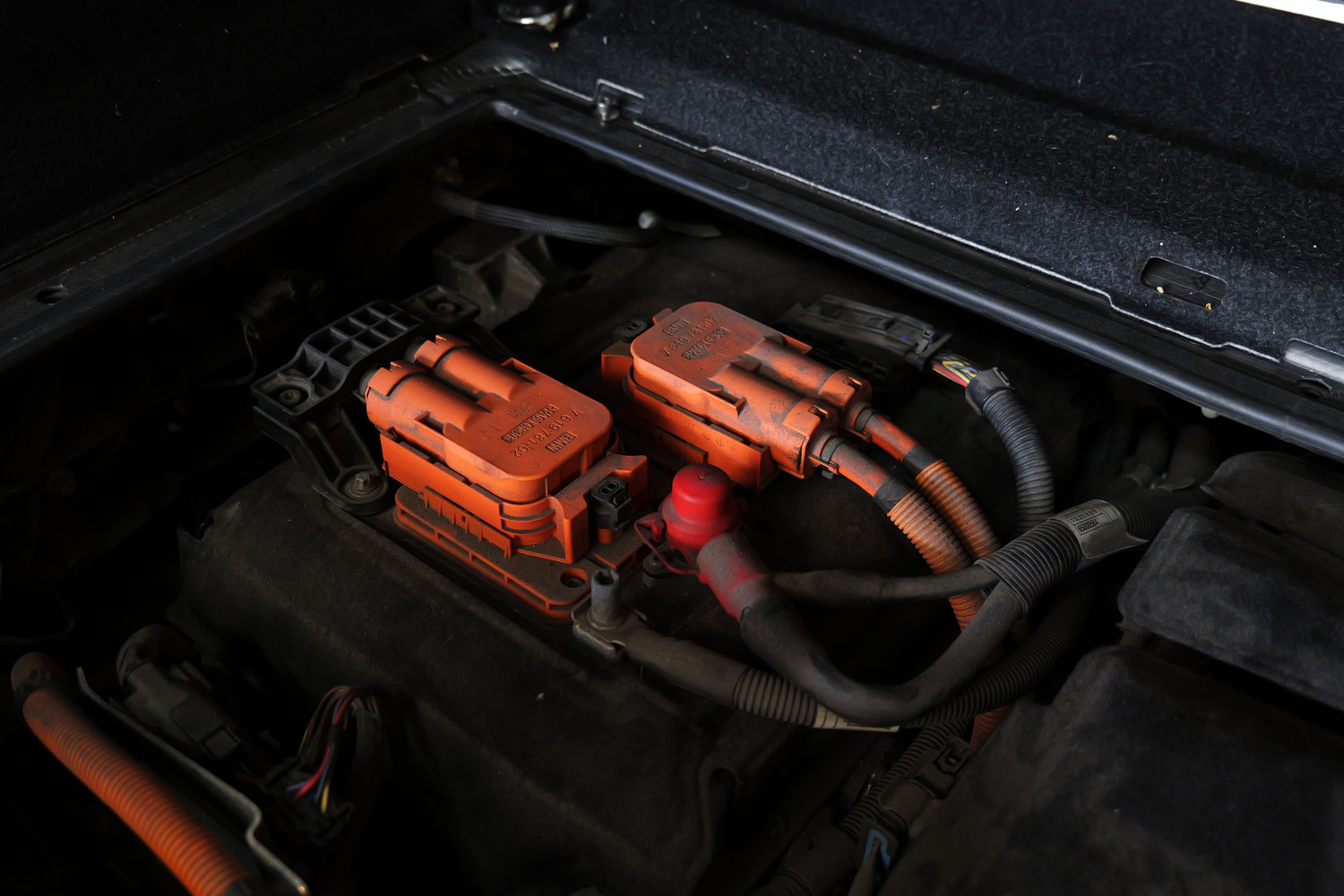
High-voltage cables are designed to withstand demanding electrical loads and are usually easy to identify by their distinctive orange insulation.
Although they are built for durability, faults can still occur because of corrosion, accident damage, moisture, previous repairs or damaged connectors.
Even a relatively small connection problem can interrupt communication or energy flow within the drivetrain.
Cooling system faults
High-voltage components generate heat and need effective temperature management.
Depending on the vehicle, separate cooling circuits or airflow systems may be used for:
- the HV battery
- the inverter
- electric motors
- charging electronics
Pump failures, low coolant levels, blocked battery vents or contaminated cooling fans can cause operating temperatures to rise.
The vehicle may then limit performance or display warning messages to protect expensive electrical components.
Good to know:
Some faults that initially appear to involve a battery or inverter can actually be caused by the system responsible for keeping that component cool.
What are the symptoms of a high-voltage system fault?
The exact symptoms depend on the vehicle and the component affected.
Common warning signs:
✓ Hybrid or EV system warning
✓ Reduced vehicle power
✓ Vehicle unable to enter drive mode
✓ Reduced electric driving
✓ Charging problems
✓ Higher fuel consumption in a hybrid
✓ High-voltage isolation warning
✓ Battery temperature warnings
✓ Unusual cooling fan operation
✓ Intermittent drivetrain faults
Many of these symptoms overlap with other faults. A warning message can tell you that something is wrong, but it usually cannot identify the exact repair required.
If your vehicle is showing a general system warning, our guide to the hybrid warning light explains what to do next.
When should you stop driving?
Warning only
If the vehicle operates normally, arrange diagnostics and follow manufacturer guidance for the warning displayed.
Reduced performance
Limit unnecessary driving and arrange inspection. The vehicle may be operating in a protective mode.
Serious electrical fault
Major power loss, overheating, unusual smells or serious high-voltage warnings require immediate attention.
Manufacturer-specific dashboard guidance should always take priority because different vehicles respond to high-voltage faults in different ways.
How does high-voltage system diagnosis work?
Effective high voltage system repair starts with understanding what actually caused the fault.
1
Read fault codes and vehicle data
Diagnostic information provides the first clues about which system detected the abnormal condition.
2
Analyse live high-voltage parameters
Battery voltages, temperatures, inverter data and other live parameters help show how the system behaves in real time.
3
Inspect the physical system
Wiring, connectors, cooling components and visible high-voltage equipment may need to be inspected.
4
Perform targeted testing
Additional electrical, battery, isolation or component testing can confirm the source of the problem.
5
Choose the correct repair
Only after the fault has been confirmed should components be repaired, regenerated or replaced.
Why fault codes alone are not enough
A fault code tells you…
Which system detected an abnormal condition and where further investigation should begin.
A diagnosis tells you…
What actually caused the problem and which repair should correct it.
This distinction is particularly important when high-voltage components can represent a significant part of the vehicle’s value.
What can high voltage system repair involve?
There is no single repair that applies to every high-voltage fault.
Battery work
Diagnostics, module repair, regeneration or battery replacement where necessary.
Inverter repair
Diagnosis and repair of inverter or power electronics faults.
HV components
Repair or replacement of damaged high-voltage components.
Electrical repairs
Repair of wiring, connectors, sensors or communication faults.
Cooling repairs
Restoring correct cooling for batteries, inverters or related components.
System verification
Testing the repaired vehicle to confirm that the original fault has been resolved.
HybridElectric workshops provide specialist hybrid and EV services, including diagnostics and repair of high-voltage vehicle systems.
Can high-voltage components be repaired instead of replaced?
Sometimes.
Whether a component can be repaired depends on its construction, the type of damage and the overall condition of the system.
For example, a battery pack may have a limited number of weak modules while most of the battery remains usable. An inverter-related fault may originate in a supporting component rather than requiring replacement of the complete inverter.
In other cases, replacement may be the safest and most reliable option.
Repair should follow diagnosis, not guesswork.
High-voltage batteries, inverters and electric drivetrain components can be expensive. Confirming the fault before replacement is one of the most important parts of the repair process.
Why specialist high-voltage training matters
Hybrid and electric vehicle systems operate at potentially dangerous voltages.
Technicians working on these vehicles need appropriate knowledge, protective equipment and procedures for safely isolating and testing the high-voltage system.
This is one of the key differences between specialist hybrid and EV repair and conventional vehicle maintenance.
For independent workshops interested in developing these capabilities, HybridElectric also supports the growth of specialist knowledge through its international workshop network. Learn more about how to join HybridElectric.
Can regular maintenance prevent high-voltage faults?
Not every electrical fault can be prevented, but good maintenance can reduce the risk of some problems developing unnoticed.
Useful checks include:
✓ Keeping battery cooling systems clean
✓ Maintaining correct coolant levels
✓ Investigating recurring dashboard warnings
✓ Checking abnormal battery behaviour
✓ Reacting to charging problems early
✓ Following manufacturer service procedures
High voltage system repair FAQ
What does a high-voltage system warning mean?
It means the vehicle has detected an abnormal condition within or related to the high-voltage system. Battery, inverter, wiring, cooling, sensor and isolation faults are among the possible causes.
Can I drive with a high-voltage fault?
It depends on the fault and the vehicle manufacturer’s guidance. Significant power loss, overheating, serious electrical warnings or abnormal behaviour should be treated as reasons to stop and seek professional assistance.
Does a high-voltage fault mean the battery needs replacement?
No. The fault may originate from the battery, inverter, wiring, cooling system, sensors or another component. Diagnostics should confirm the cause before replacement is considered.
Can high-voltage wiring be repaired?
Repair options depend on the vehicle design, location and type of damage. High-voltage wiring should only be inspected and repaired according to appropriate safety and manufacturer procedures.
Why does high voltage system repair require a specialist?
These systems combine potentially dangerous voltages with complex electronics. Correct diagnostics, isolation procedures, suitable equipment and specialist knowledge are required to work safely and identify faults accurately.
Find a high-voltage vehicle specialist
Successful high voltage system repair starts with finding the real cause of the fault. The battery, inverter, wiring and supporting systems all interact, which makes specialist diagnosis particularly important.
The HybridElectric workshop network connects specialists experienced in hybrid and electric vehicle diagnostics, high-voltage systems, batteries and advanced electrical repairs.
High-voltage or EV system fault?
Find a specialist workshop for professional hybrid and EV diagnostics and identify the cause before replacing expensive high-voltage components.
Find a workshop
Explore our services